Stories That Resonate
Echo Framely is a house for filmmakers who refuse the obvious, the templated, the safe. Films. Experimental cinema. Visual poetry. Hand-built, one frame at a time. With conviction. Without apology.
↓ Begin
Take your seat.
The cinema is about to open.
tap the clap
Echo Framely is a house for filmmakers who refuse the obvious, the templated, the safe. Films. Experimental cinema. Visual poetry. Hand-built, one frame at a time. With conviction. Without apology.
"What made me a star was that I could take a chance and not have anything to worry about in terms of losing."Shah Rukh Khan
Each film, its own world. All of them, the same house. Built without compromise. Watched without skipping. Take a seat.
The film, told by the person who made it.
Each filmmaker, on the film they made. In their own words. Unedited.
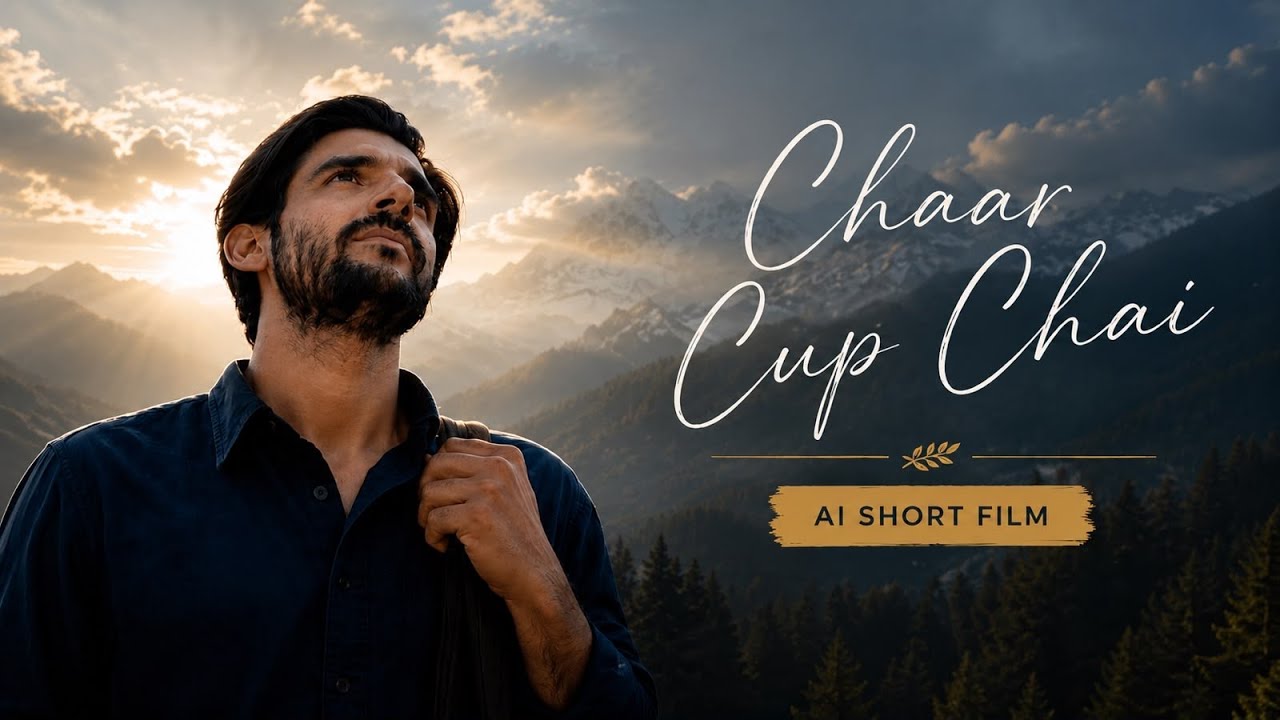
Some men carry quiet things. I made this film to see one of them. The quiet films are the hardest to make, and the ones I love most.
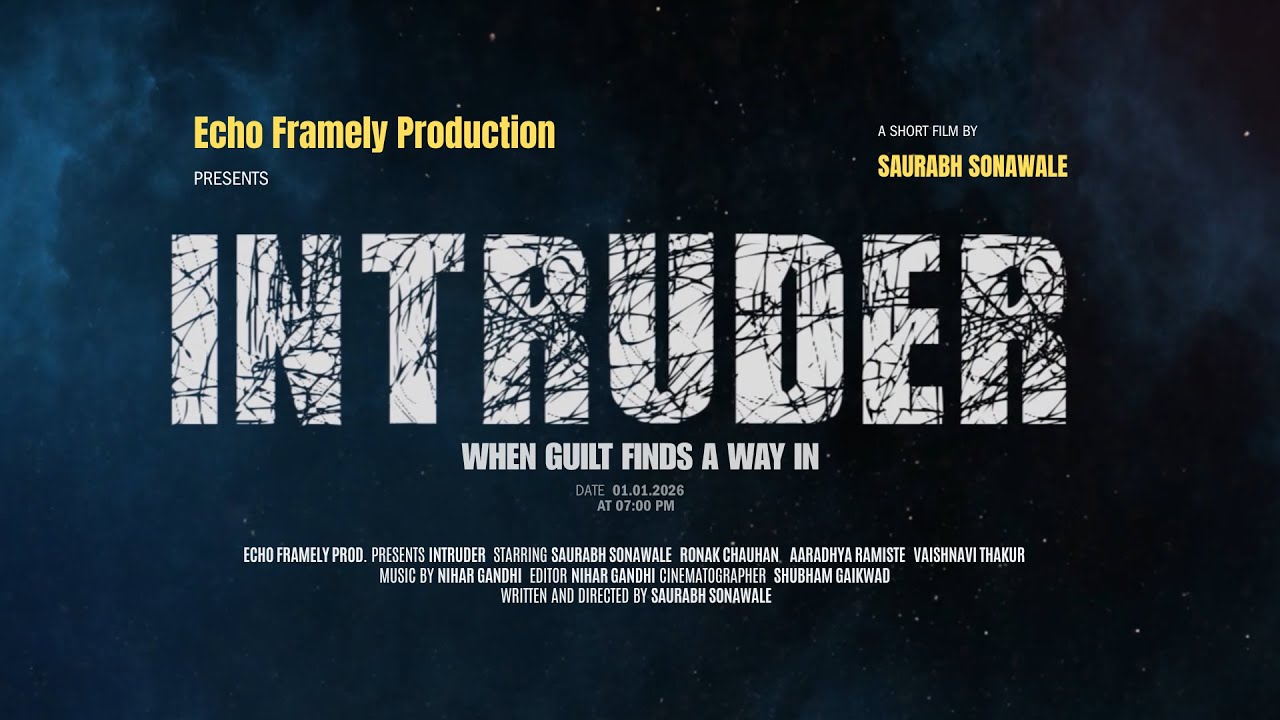
Some things follow us home. Intruder is a film about the ones that knock from the inside.
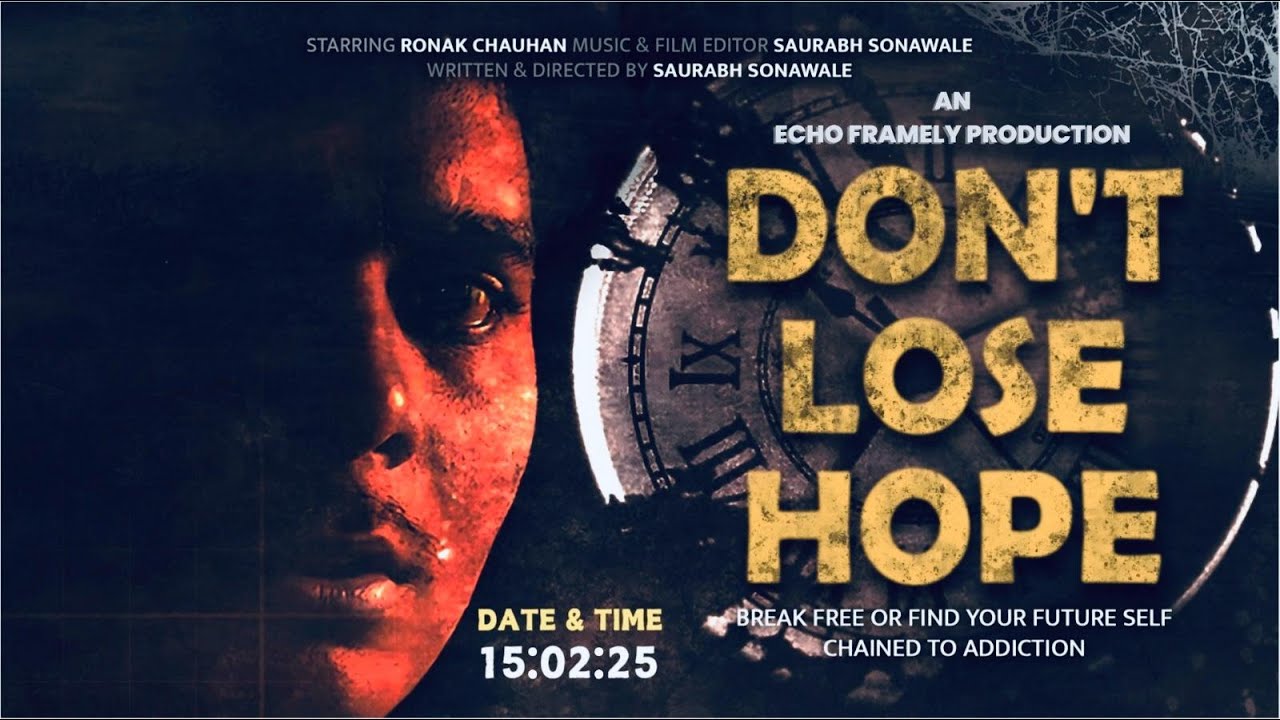
The road back is longer than the road in. This film is for anyone walking it.
"Cinema's characteristic forte is its ability to capture and communicate the intimacies of the human mind."Satyajit Ray
The stake we are putting in the ground.
Modern cinema rewards the loud. The fast cut. The dopamine. The thumbnail that yells louder than the next. The hook in the first three seconds. The cliffhanger before the title card. The film engineered for the algorithm before it is engineered for the human.
Echo Framely is built for the other viewer. The one who pauses a film at minute four because the silence is doing something. The one who watches the end credits because they are not ready to come back yet. The one who, days later, finds themselves still thinking about a single frame.
Every film here is hand-built. Every director is trusted to make it their way, with their voice, with their restraint. We will take on any subject. Any genre. Any silence, any noise. The house is built to handle whatever a film needs. No film made here will look like a film made anywhere else.
We will not chase trends. We will not optimize for shares. We will not let the thumbnail design the film. We will not make anything we would not watch alone, late at night, with no one to perform for.
We will keep the budgets honest. We will keep the runtimes as long as the film needs and not a second longer. We will give the work the time it asks for. We will start the next film only when this one is done.
The only test is the one a viewer cannot fake: did the film, when it ended, leave something behind that was not there before?
"I am not born to make dreamy movies."Anurag Kashyap
From the first idea to the final cut.
A film, for us, is not a thing that gets finished. It is a thing that gets lived. We have learned this the slow way. The shape of a film changes a hundred times before a single frame is shot. Sometimes in the shower, sometimes in the middle of a sentence, sometimes at 3 a.m. when we have closed the laptop and a missing piece arrives on its own and we open the laptop again. It changes once more on set, in the lens, in the small involuntary thing an actor does between takes that nobody asked them to do. It changes one final time in the edit suite, when the room is dark and the same six seconds get watched fifty times until they finally speak. The process is the work. The film is what survives.
We begin with a question, and we sit with it. Sometimes for weeks. Before a single page is written, we know what the film is about, not the plot, but the thing underneath the plot. We write the answer to that question down on the first page of a notebook, and we go back to it every time the project starts to wander. Then the writing begins. Drafts get read aloud, sometimes to ourselves, sometimes to one trusted person on a phone call, sometimes to no one in particular while making chai. Lines get crossed out with a pen, not deleted on a screen. New ones get written in the margins. Index cards go up on a wall, get moved around, get moved back. Locations get scouted not for how they look, but for how they feel at the hour we mean to shoot. We walk them at dawn, we walk them at dusk, we sit there for an hour without speaking. Shotlists get drawn by hand because typing them makes them feel less true. Reference frames get pinned to a wall in clusters. Music gets played for the actors before the camera ever rolls, so the silence on set already knows the song that will live underneath it.
On the day, the plan exists so we can let go of it. The most beautiful moments in any film we have made were not the ones we rehearsed. They were the ones we caught because we were ready to catch them. A look. A breath. A slow pour of tea into a paper cup at sunrise. A character pausing for one beat longer than the script said, because the actor knew something about their character that we did not. The discipline of the prep buys us the freedom to chase what the day actually gives. We shoot in small crews. Sometimes a crew of four, sometimes a crew of two, sometimes a crew of one with a tripod. We move quietly. We do not shout. We trust the actors to do what they do best, and we move the camera to meet them, not the other way around. At lunch we sit on the ground with the team and eat from the same dabba. This is part of the craft too.
Then the edit. The longest, slowest, most loving part. A film is found in the edit. A film is also lost in the edit. The first cut is always longer than it should be, and then, with each pass, the film tells us what it does not need. We have killed scenes we adored. We have brought back scenes we had cut three times before. We have spent an entire afternoon arguing about a single frame and gone home knowing we made the right choice. Color comes next. Quiet, patient, almost meditative work, where a single warm push on a face can change what the whole scene means. Sound, after color, because color tells us what the scene already is. Music, last and most carefully, because a wrong note in the wrong place can wound a film that was otherwise whole. We watch the final cut, alone first, then together, then again, until it stops surprising us. Only then does it leave the room.
After that, the film is no longer ours. It belongs to whoever sits with it. Some films are watched once and remembered for a decade. Some films are watched a hundred times and forgotten. We do not get to choose which one we have made. We only get to be honest about the making, and to send the film out cleanly, and to begin again. That is the whole job. That is the whole joy. The next idea is already pacing in the next room, waiting to be sat with.
I founded Echo Framely in 2025 with one question in mind: what would a house for storytelling look like if it served the story, instead of the other way around?
Echo Framely begins with films. It does not end with films. The house is being built to make any kind of work that a story demands, in any form a story takes. Films now. Series in time. Worlds whose form has not been named yet. Films are where we have started because film is the form that asks the most of us. They will not be where we stop.
I run this house the way a director runs a set: with a clear vision, and the trust to let the right people make it real. I direct some of the work that lives here. I curate the rest. I am building a place where filmmakers, writers, composers, designers, and the storytellers of every form to come are trusted to make their work their way, and where the house carries the risk so that the work can be honest.
I am building something that will outlast me. A house that, fifty years from now, still makes the work I cannot yet imagine, with people who are not yet born. That is the only kind of project I have it in me to build. I do not yet know every shape this house will take. I know the kind of work that will leave it: work that takes its time, work that respects the viewer, work that could only have been made by people who cared about it.
The films are first. Everything else follows. And whatever Echo Framely becomes, the standard will be the one the films were held to: honest, hand-built, hard-earned.
Every film deserves the right hands. The makers below are credited for what they brought to the work currently in the archive. Each one named. Per film. Per role.
"A film is (or should be) more like music than like fiction. It should be a progression of moods and feelings. The theme, what's behind the emotion, the meaning, all that comes later."Stanley Kubrick
A short note before you write to us. We respect your time, and our own.
What we are looking for.
Everything else.
The film that could not have been made anywhere else. Any genre. Any subject. Any length. The film that took its time. The frame held one beat longer than it needed. The story that lingers after the credits cut to black. Honest. Hand-built. Hard-earned.
And more than the film, the person behind it. The filmmaker who has lived the film inside themselves before lifting a camera. The director whose crew shows up on the first day already half-knowing the film, because the vision has been carried across to every person who will help build it. Line by line. Image by image. Silence by silence. The film is only as honest as the conversation that built it.
The film that wouldn't exist without you making it.
If that is the film in your hands, send it. If you are still building it, send it when it is finished. We respond to every submission. Even when the answer is no.
For festival submissions. For distribution and press. For casting, scoring, sound design, color, or any other craft a film asks for. For collaborators who think the way the house thinks. Or simply to tell us that a film stayed with you. We read every message that comes through this door.
resonate@echoframely.in